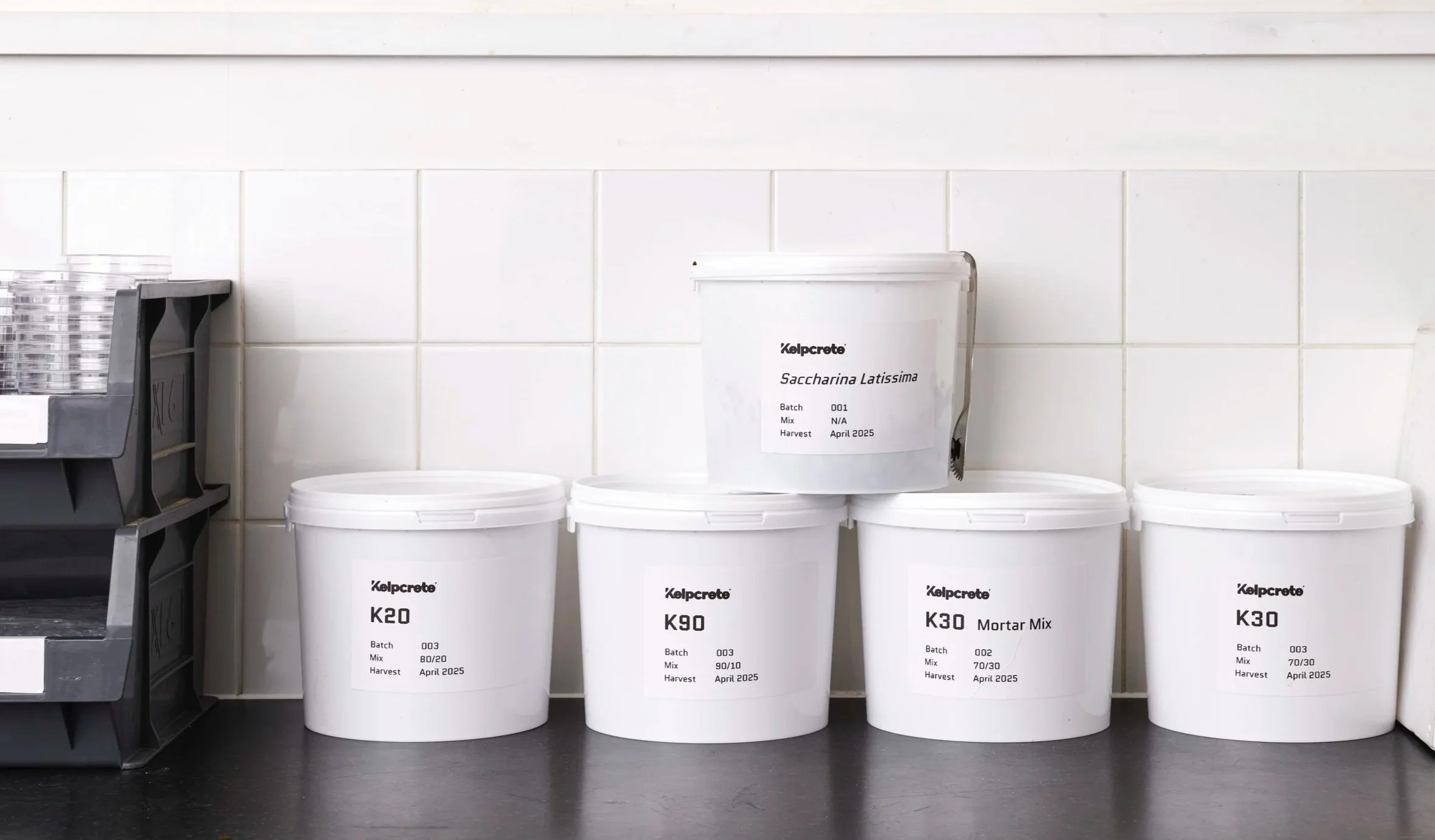
Our Story
Early laboratory testing indicates that Kelpcrete can achieve compressive and tensile performance benchmarks comparable to selected conventional cementitious composites, while offering a promising pathway toward circular, bio-based construction systems and significantly lower embodied carbon within the built environment.
Kelpcrete is an innovative low-carbon composite material developed using Saccharina latissima kelp responsibly farmed in the North Sea. The kelp captures biogenic carbon during growth while supporting regenerative marine cultivation practices. Minerals and biopolymers recovered from the kelp are used to replace up to 30% of Portland cement in composite formulations, reducing reliance on high-emission construction materials.
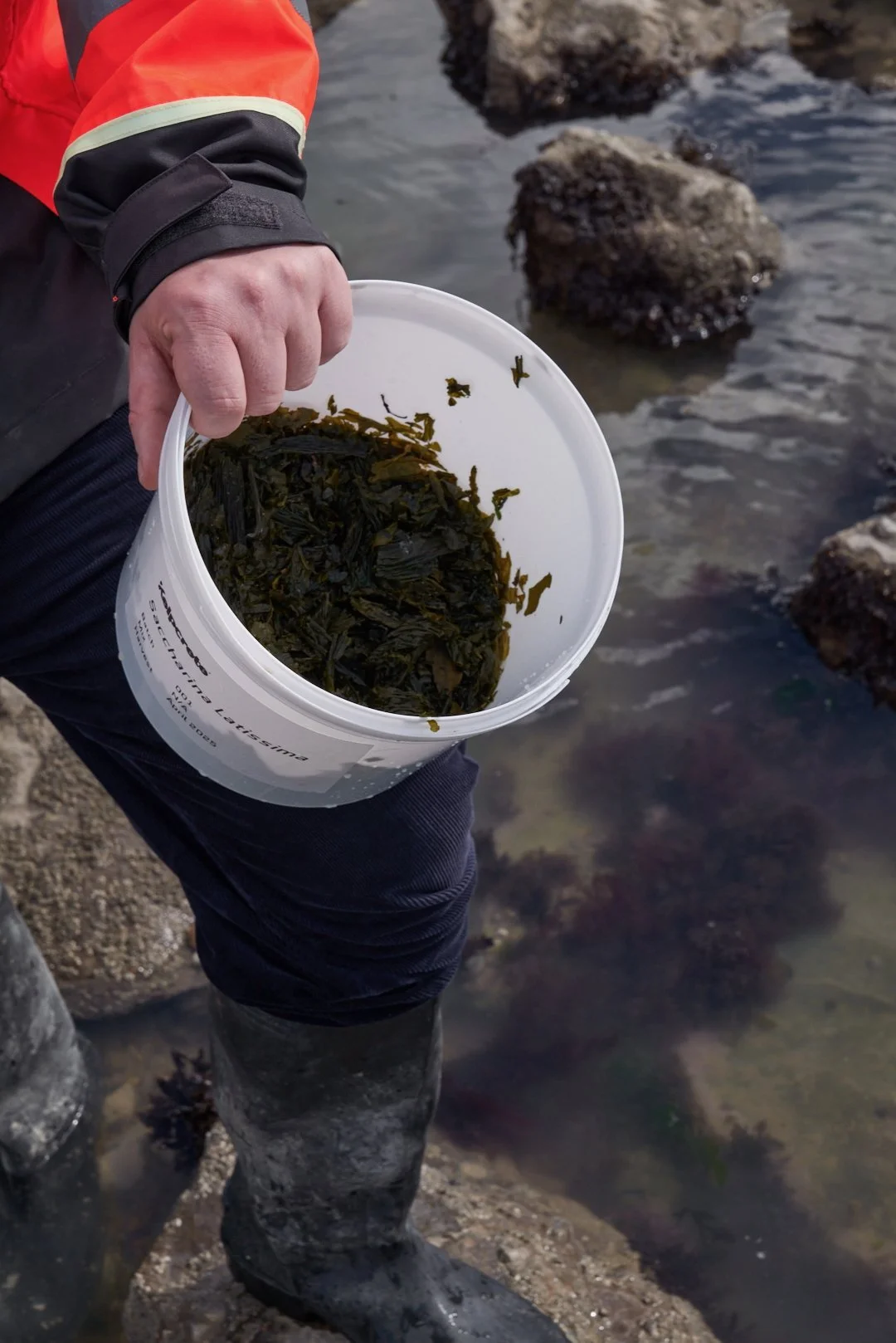
Kelpcrete is an emerging low-carbon construction material made using minerals and biopolymers extracted from Saccharina latissima kelp. Developed as a partial alternative to conventional cement systems, it is designed to reduce embodied carbon while supporting circular, bio-based construction methods.
What is Kelpcrete?
Kelpcrete represents a potential pathway toward lower-carbon construction by combining marine biomass, material innovation, and scalable building applications. The project explores how responsibly cultivated seaweed can contribute to future sustainable architecture and more resilient material supply chains.
Why is Kelpcrete important?
Our kelp is responsibly farmed in the North Sea by Norfolk Seaweed. The cultivation process supports regenerative marine practices and captures biogenic carbon as the kelp grows naturally in offshore environments.
Where does our kelp come from?
Yes and continues to be. Kelpcrete is currently undergoing laboratory testing with Canterbury Christ Church University (CCCU) at Discovery Park. Research includes compressive and tensile strength analysis, mineral characterisation, material consistency testing, and performance benchmarking against conventional cementitious materials.
Has Kelpcrete been tested?
How does Kelpcrete reduce cement use?
Kelp-derived minerals are used to replace up to 30% of Portland cement in selected composite formulations. This reduces reliance on one of the world’s highest carbon-emitting construction materials while maintaining targeted structural performance characteristics.
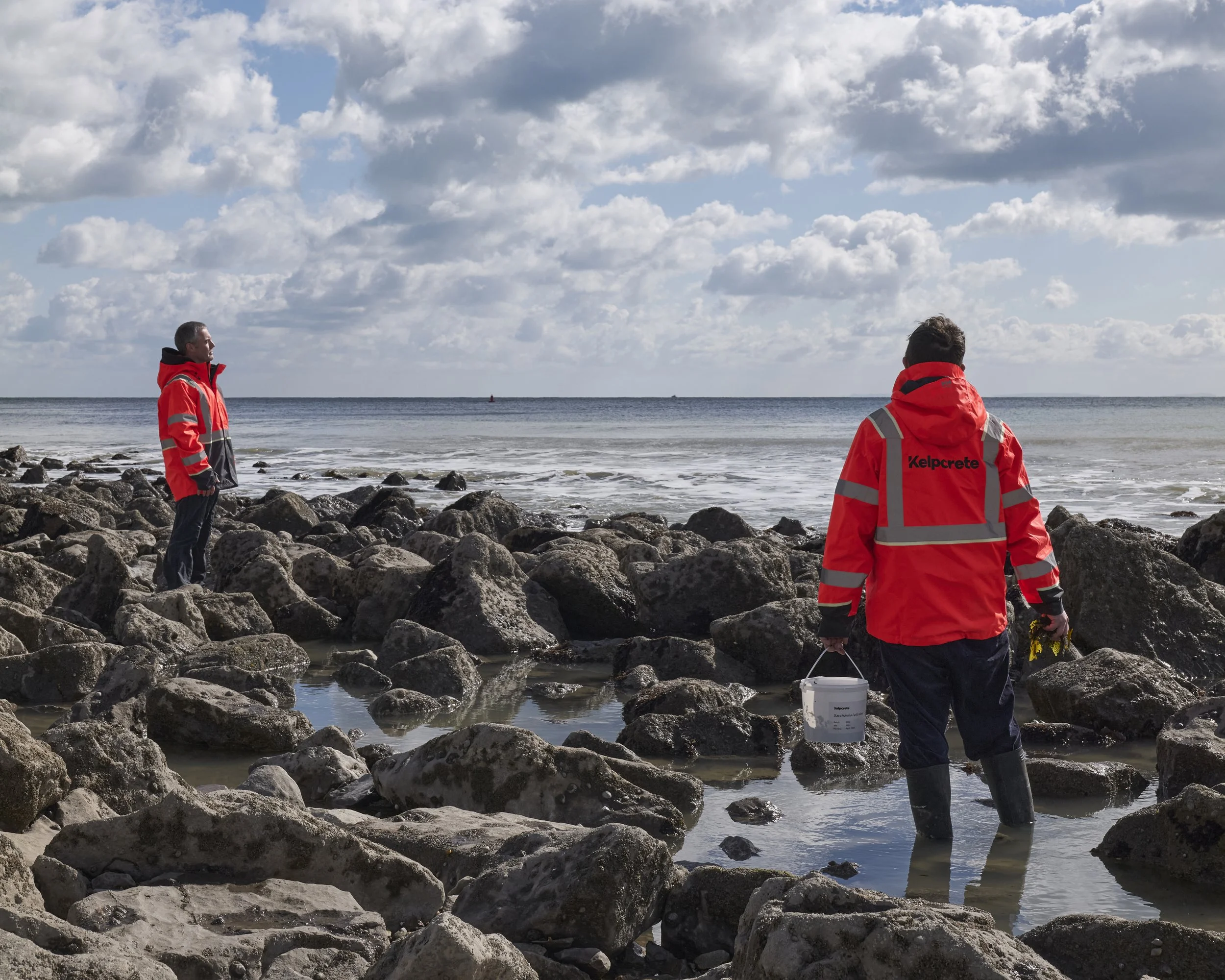
Rigorous Research & Validation
Kelpcrete is being developed in collaboration with Canterbury Christ Church University (CCCU) at Discovery Park, where controlled laboratory research is supporting validation of the material system. CCCU provides scientific testing and analytical expertise focused on mineral extraction efficiency, alginate characterisation, material consistency, and structural performance benchmarking.
Current work includes compressive and tensile strength testing, purity analysis, and optimisation of kelp-derived additives sourced from responsibly farmed Saccharina latissima supplied by Norfolk Seaweed.
Independent compressive strength testing has also been conducted by Sandberg LLP using methodologies aligned with the BS EN 12390 series for hardened concrete assessment, including controlled specimen preparation, curing, and calibrated compression loading procedures. Early-stage formulations have demonstrated compressive performance reaching up to 90% of conventional Portland cement-based concrete in selected tests, supporting ongoing research into scalable, low-carbon alternatives for future architectural applications.

Marine Carbon Capture
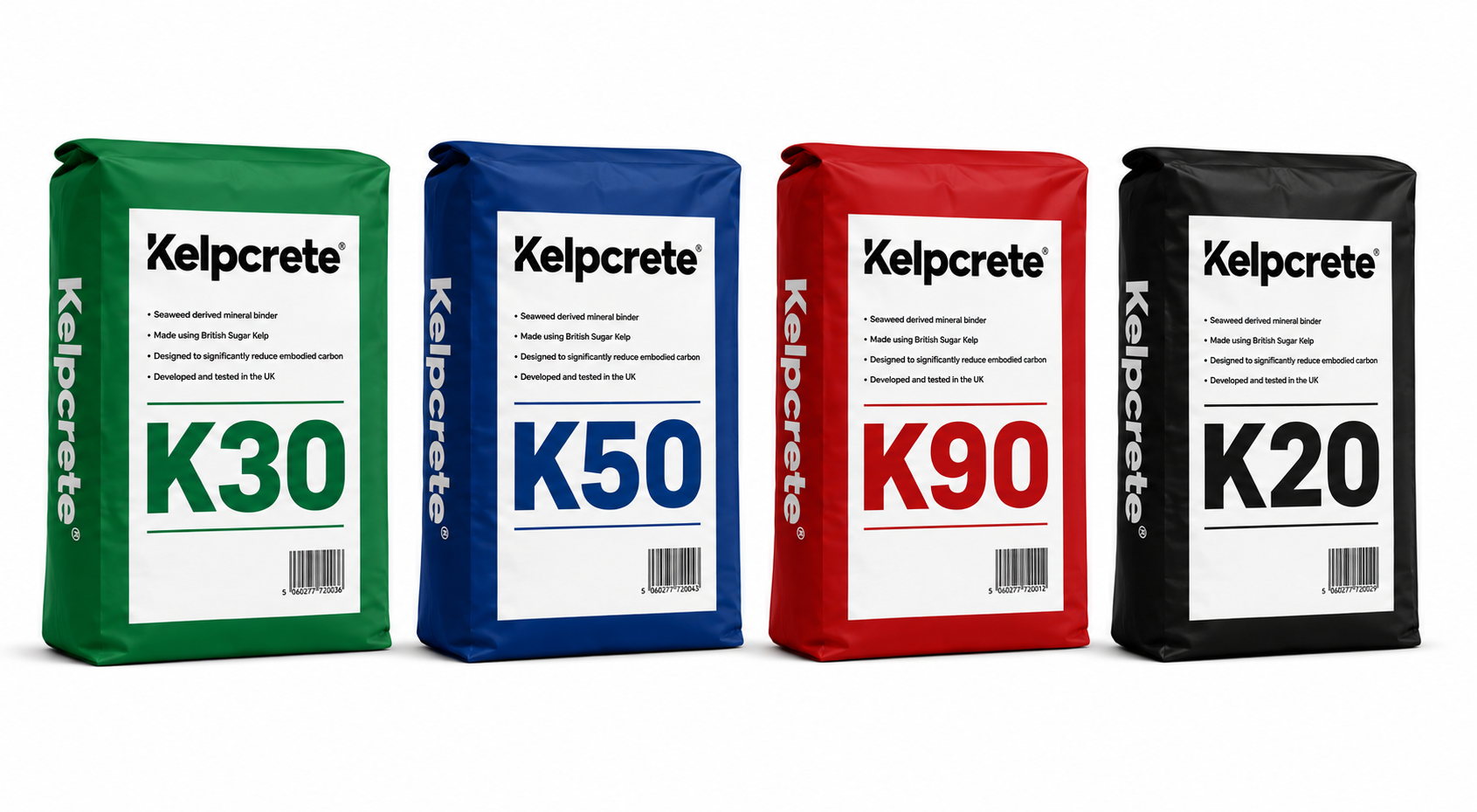
Kelpcrete incorporates responsibly farmed Saccharina latissima supplied by Norfolk Seaweed as part of a marine-led approach to reducing embodied carbon in construction materials.
Early-stage carbon modelling indicates that our K30 Kelpcrete composition, using approximately 30% kelp-derived substitution, could reduce net embodied carbon from around 850 kilograms of CO₂ per tonne for conventional Portland cement systems to approximately 265 kilograms of CO₂ per tonne, representing a reduction of around 68%.
This reduction comes from both lower cement-related emissions and the biogenic carbon captured and stored within harvested kelp biomass during cultivation.
As development continues, we are currently researching K30, K50, and K90 compositions, with the long-term ambition of significantly increasing kelp substitution through ongoing material, mineral recovery, and structural performance testing.
Norfolk Seaweed is the primary supply partner for the Kelpcrete project, cultivating Saccharina latissima off the Norfolk coast in the North Sea.
Using suspended offshore cultivation systems, the kelp grows naturally in nutrient-rich seawater without freshwater, fertilisers, or pesticides. As it matures, the kelp absorbs dissolved carbon dioxide and excess nutrients, contributing to improved water quality and marine biodiversity.
This pioneering farm represents an emerging UK blue economy, helping diversify and supplement traditional fishing industries through sustainable marine cultivation and coastal innovation.
Sustainable Kelp Supply